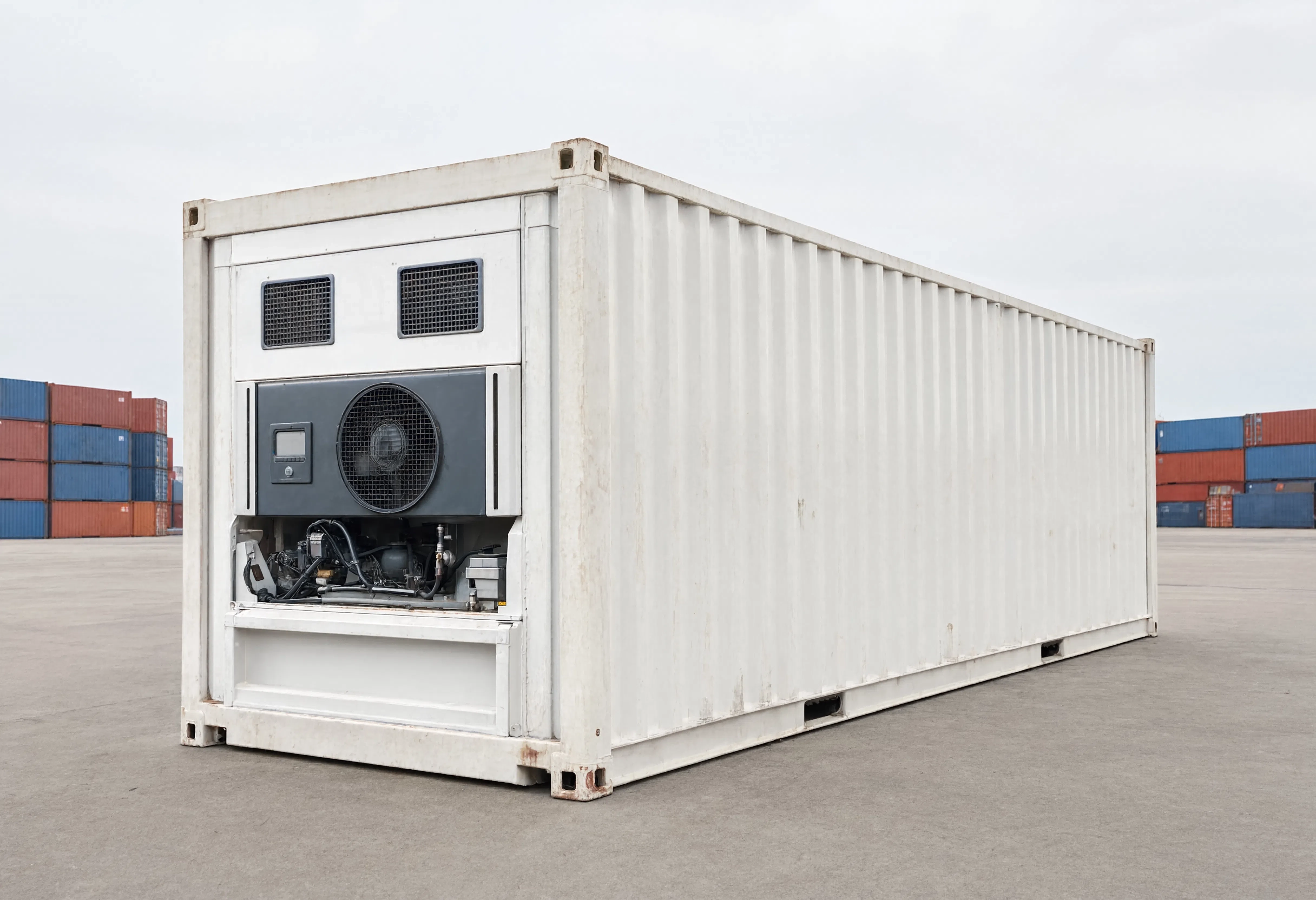
A refrigerated container — a reefer, in the trade — is a shipping container fitted with its own fridge unit, holding a set temperature anywhere from about -25°C to +25°C. It is the quickest way to add cold storage without building anything: the unit is craned into place in a morning, plugged into a three-phase supply, and holding temperature the same day. No planning application, no fixed plant, and it leaves when you no longer need it.
EuroReefer is an independent comparison site specialising entirely in refrigerated containers across Europe. We do not own any stock, depots or lorries — we put your requirement in front of specialist suppliers, who contact you directly if they can meet your need, so you can compare their offers side by side. Every figure below is an indicative market range observed in 2026, not a quotation.
Where to start
Everything on this site hangs off two decisions — hire or buy — and the practical questions that follow from them:
- Refrigerated container hire — indicative UK rates, how tiered pricing works, and the 90-day minimum explained honestly. If your need is a wedding, festival or seasonal peak, go straight to short-term and event hire.
- Refrigerated containers for sale — the buying route, from used units at an indicative £4,500 to £7,500 to new one-trip machines. The 20ft refrigerated container is the market’s default size and has its own page.
- Refrigerated container prices — every UK figure on this site gathered in one place: hire, purchase and the costs that surround them, all ex VAT.
- Cold storage containers — the same product under the name the cold-storage trade uses: a portable, walk-in cold store. Start here if that is the vocabulary you shop in.
- Freezer containers — frozen storage at -18°C and below, and why it is the same machine set colder.
- Guides — the homework that saves money: running costs, power supply and buying used.
- Emergency cold storage — what to do in the first hour after a walk-in freezer fails, before any quotes arrive.
Hire or buy?
The rough dividing line is time. If you need cold storage for a season, an event, a refurbishment or a breakdown, refrigerated container hire is almost always the cheaper route — you pay for the months you use and hand the maintenance risk back to the supplier. If the need runs beyond roughly 18 to 24 months, the arithmetic tips and a refrigerated container for sale on the used market starts to pay for itself.
| Route | Indicative 2026 range (ex VAT) | Best suited to |
|---|---|---|
| Hire, per day | from ~£12/day on longer terms | ongoing seasonal or project storage |
| Hire, per week (20ft) | ~£400 – £450 | short projects, peak trading |
| Mobile cold room hire | ~£120 – £190/week | weddings, festivals, small venues |
| Used purchase | ~£4,500 – £7,500 | permanent capacity, 18 months+ |
| New, one-trip | from ~£19,000 | food and pharma, warranty required |
Hire rates are tiered: the daily figure falls sharply as the period lengthens, so a headline day rate quoted for a fortnight tells you very little about a nine-month price. Watch the minimum hire period too — a fair number of suppliers set it at 90 days, though genuine short-term and weekend hire does exist. It is the single most common reason an enquiry comes back unpriced, so put your dates in writing at the outset. The full cost picture, hire and purchase side by side, is on our prices page.
Sizes and capacity
Three formats cover nearly all demand. Choose on pallet count first, then on whether your yard can actually take the unit and the lorry delivering it.
| Size | Internal dimensions (approx.) | Volume | Euro pallets | Typical use |
|---|---|---|---|---|
| 10ft | 2.8 × 2.3 × 2.3 m | ~15 m³ | 4 – 5 | events, small shops, tight sites |
| 20ft | 5.44 × 2.29 × 2.27 m | ~28 m³ | 10 – 11 | the default: restaurants, butchers, caterers |
| 40ft high cube | 11.6 × 2.3 × 2.5 m | ~67 m³ | 23 | food production, wholesale, logistics |
The 20ft is the workhorse — common enough that buying a 20ft refrigerated container has a page of its own. Note that virtually the entire 40ft reefer fleet is high cube — roughly 30 cm taller than a standard box — so if a supplier offers you a 40ft, assume high cube unless told otherwise, and check your headroom and access before delivery day.
Power: the part people underestimate
The standard connection is three-phase 380/400V via a 5-pin 32A CEE socket, with the unit drawing somewhere between 5 and 12 kW depending on size and setpoint. Some smaller formats are available in 230V single-phase, which is worth asking about if your site has no three-phase supply. Failing that, a generator is the usual workaround for fields and event grounds. Plugs, phases, generators and the sign-off to arrange before delivery day are covered in our power supply guide.
Running costs are real and separate from the hire rate. A 20ft reefer consumes in the order of 3.5 to 4.5 kWh per hour, which lands at roughly £9 to £22 per day of electricity depending on your tariff, ambient temperature, how often the doors open and whether you are running positive or negative. Freezing costs more than chilling. Add delivery and collection at an indicative £700 to £1,700 depending on distance and whether a crane is needed. The arithmetic by size and set point — and the practical ways to trim the bill — is worked through in our running costs guide.
Temperature: chilled, frozen, or neither
A standard reefer covers positive temperatures (0 to +8°C for fresh produce, catering, flowers) and negative (-18 to -25°C for frozen goods, ice cream, meat) from the same machine — you simply change the setpoint. What most people search for as a freezer container is exactly this: a standard reefer set colder, priced on the standard market. Super-freezer units reaching -60 to -70°C exist for pharmaceutical and specialist seafood work, but they are rare and priced accordingly.
If you only need insulation rather than active cooling, an insulated (non-operational) container costs around 30 to 50% less — indicatively in the region of £3,500 — and suits temperature-sensitive dry storage where you are slowing change rather than producing cold.
Who uses them
Caterers and restaurants bridging a fridge breakdown or a Christmas peak. Butchers, who often want meat rails and hooks fitted. Event organisers, from village fêtes to festivals with several bars. Game dealers handling a venison season that arrives all at once. Pharmaceutical and clinical storage under controlled temperature. Growers with a harvest that will not wait. Many arrive at the product from the cold-storage side rather than the container side — if “portable cold storage container” is closer to your search than “reefer”, that page speaks your language. Each use brings its own constraints on temperature, logging and format — say which one is yours and the quotes come back sharper.
Buying used: what actually matters
The used market is where most purchases happen, and it is where the money is won or lost. Units are graded A, B or C, and a PTI test (pre-trip inspection) is the standard proof that the fridge unit was checked and works. Our page on used refrigerated containers explains the grades and indicative pricing; the used buying checklist walks through the inspection item by item. Ask for the PTI report, ask for the make and running hours — Carrier, Thermo King, Daikin and Star Cool dominate the fleet — and inspect the insulation panels, floor and door seals yourself or through a surveyor. The box is rarely the problem; the compressor is.
For the reading that pays for itself before you sign anything — running costs, power, the used-market pitfalls — start from the guides hub.
Get comparable quotes
Describe your requirement once — size, temperature, dates, postcode, hire or purchase — and we pass it to specialist suppliers, who contact you directly if they can meet your need. Compare the offers yourself: it is free and carries no obligation.
Frequently asked questions
How much does a refrigerated container cost?
As indicative 2026 ranges: hire starts at roughly £12 per day on longer agreements, with a 20ft unit costing in the region of £400 to £450 per week. To buy, a used reefer typically runs £4,500 to £7,500 depending on size, grade and the condition of the fridge unit, while a new one-trip 20ft starts around £19,000 excluding VAT. Delivery and electricity are billed separately.
Can I hire a refrigerated container short term?
Often yes, but check first. A number of suppliers apply a minimum hire period of 90 days, because the cost of transport and installation weighs heavily on very short bookings. Others do run genuine short-term and event hire by the week or weekend. State your exact dates in your enquiry so you only receive quotes from suppliers who can actually serve that period.
What power supply does a refrigerated container need?
The standard is a three-phase 380/400V supply through a 5-pin 32A CEE socket, drawing roughly 5 to 12 kW depending on size. Some smaller units run on 230V single-phase. If there is no three-phase supply on site — a field, a car park, an event ground — a suitably rated generator is the usual answer, and most hire firms can supply one.
What should I check when buying a used refrigerated container?
Ask for the grade (A, B or C), a recent PTI test report, and the make and running hours of the fridge unit — Carrier, Thermo King, Daikin and Star Cool are the common ones. Inspect the insulation panels, floor T-bars, door seals and the interior for damage or odour. A cheap box with a tired compressor is not a bargain.